
Paradise Lost
A reappraisal of Plato, B. F. Skinner’s Walden Two, utopian novels, and John Berger on tyranny



“In the shadow of the war to end all wars, people desperately hoped that the human race would never again tolerate such fevered violence, and Esperanto grew hand in hand with the pacifist movement,” writes Katie Thornton in her piece “Love Language.” In the June issue, Thornton reports from the 110th annual World Esperanto Congress in Brno, Czech Republic, drawing a portrait of the contemporary Esperantists and the apparent futility of a movement premised on achieving world peace. Taking up this theme of utopian ideals, this edition of the From the Archive Newsletter includes: Isidor F. Stone’s reappraisal of Plato’s political philosophy; a story of the psychologist B. F. Skinner’s quest to engineer human happiness; a review of Edward Bellamy’s nineteenth-century utopian novel; and an essay from John Berger on tyranny. To read these articles and gain access to our fully digitized archive, subscribe to Harper’s Magazine today.
[Revision]
Plato’s Ideal Bedlam
Another look at those philosopher kings
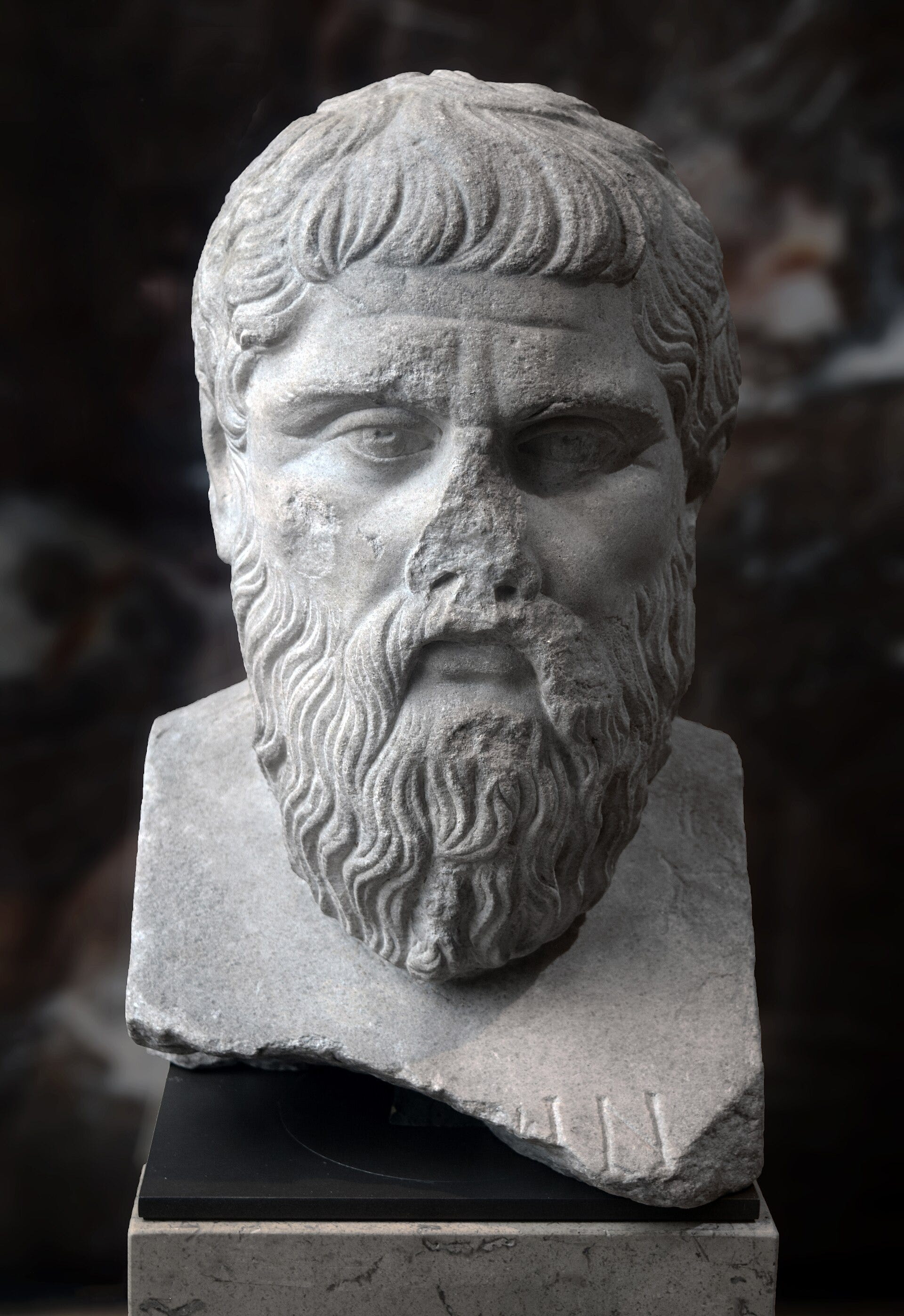
Published in 1981, Isidor F. Stone criticizes the utopia envisioned in Plato’s Republic.
“In the construction of Plato’s utopia, fundamental problems of morality and power are glossed over or ignored. The underside and scaffolding have to be kept in the dark; they would otherwise make the process of erecting Plato’s ideal society too repulsive. The gruesome details are made easy to hide by the absence of normal thrust and rejoinder in the dialogue, which needs only be compared with the agonizing debates in Thucydides to see how far the highly touted Socratic dialectic falls short of the genuine article. In these fixed boxing matches, the opposition always takes the count, and Socrates always walks off with the verdict while smugly advertising his humility.”
[Report]
Harvard’s Skinner
The last of the utopians
By Spencer Klaw
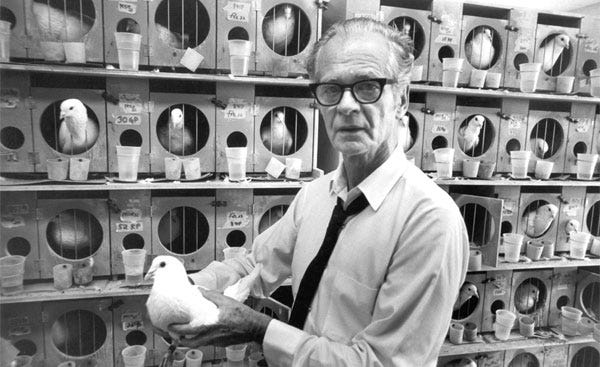
Spencer Klaw profiles the behavioral psychologist B. F. Skinner and his ambition to create a utopian community like the one described in his science-fiction novel Walden Two.
“Skinner hopes to find other and younger people than himself who will take on the task of actually organizing his projected community. But he expects, naturally enough, that they will lean on him for advice. To guide them, he has been making notes on matters such as what to name the community—he favors ‘Lifeguild’—how people will dress, and whether it would be better to ban drinking altogether, or to let new residents taper off. He has also been sounding out people who might help finance the experiment, which he believes could point the way to a harmonious world in which being good would be as natural and automatic as breathing. In such a world there would be no reason, of course, for anyone ever again to draw up plans for an ideal society, and Skinner would be recorded in history as the last of the Utopians.”

A Brave Old World
Looking forward to a nineteenth-century utopia
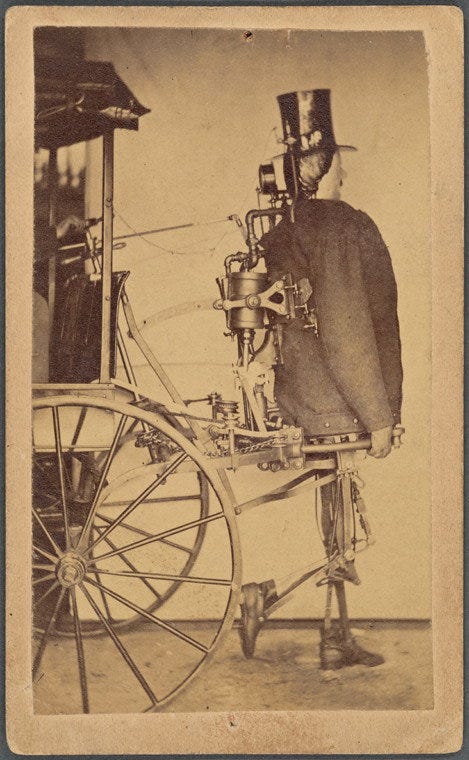
For the December 2000 issue, Russell Jacoby reviews Edward Bellamy’s widely read 1888 utopian novel, which imagines what the year 2000 might look like and comments on the outmoded political framework of “utopian convictions.”
“At best, an expression of utopian convictions will call forth a sneer from historians and social scientists. In the nineteenth century the anticipation of a future society of peace and equality was common; now it is almost extinct. Today few imagine that society can be fundamentally improved, and those who do are seen as at best deluded, at worst threatening.”
[Essay]
Where Are We?
By John Berger
Published in 2003, Berger explores the etymology of shame as a “species feeling” rather than an individual sensation of guilt.
“The new tyranny, like other recent ones, depends, to a large degree, on a systematic abuse of language. Together we have to reclaim our hijacked words and reject the tyranny’s nefarious euphemisms; if we do not, we will be left with only the word ‘shame.’”
